

Energy Community Parliamentary Plenum: integration will deliver security, with EU market access for region’s clean power next
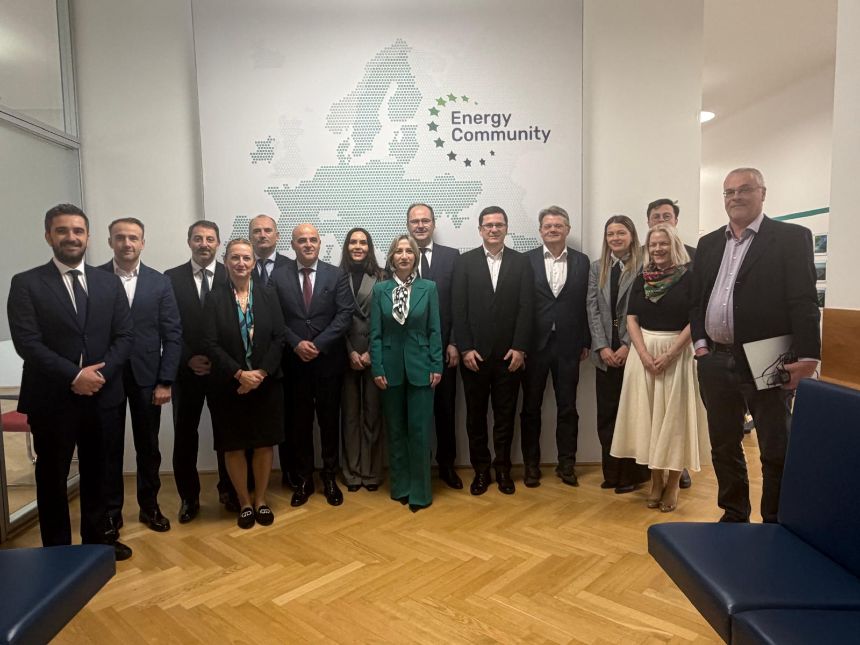
Homegrown energy, electrification and the end of Russian gas will increasingly define Europe’s energy security, and integrating energy markets with the EU delivers all three. That was the message Energy Community Secretariat Director Artur Lorkowski gave to parliamentarians from the Energy Community’s Contracting Parties, from the Western Balkans to Ukraine, Moldova and Georgia, at the Energy Community Parliamentary Plenum in Vienna today.
“Homegrown energy is becoming a mutual security imperative for the EU and its neighbours, which is why energy market integration should reward clean energy. Soon, it will," Lorkowski said.
Integrating EU and Energy Community renewables markets could help the region grow into an important source of clean energy for Europe, strengthening the region's role in diversifying Europe's energy supply, Lorkowski said. The mutual recognition of guarantees of origin is an important step toward that goal. Guarantees of origin are certificates proving that electricity came from a renewable source. Until now, certificates issued in the region could not be used in the EU. A framework prepared with the European Commission, which the Energy Community’s Ministerial Council is expected to adopt on 30 November, will change that once national systems meet the agreed conditions. This should serve as a stimulus for renewables in the Energy Community region. Producers will be able to sell their guarantees of origin on the EU market, creating additional revenue and encouraging investment in domestic renewable energy. Lorkowski urged parliamentarians to make sure their national laws meet those conditions and that producers are ready to take advantage of mutual recognition as it becomes possible.
Meanwhile, deeper integration of gas and electricity markets is strengthening the region’s resilience to external price shocks. In electricity, integration will not only create larger, more competitive markets but also pave the way for electrification. As more wind and solar power is generated in the region, larger markets will support the electrification of heating, transport and industry, helping the region meet its decarbonisation commitments and shielding households and businesses from fuel price shocks.
In gas, the EU will complete its phase-out of Russian gas next year. A recent Secretariat assessment found that if the Energy Community region follows suit, security of supply would not be affected. Integration can help open Southeast and Eastern Europe to more diverse supplies, including liquefied natural gas, and strengthen its role as a transit hub for the continent. Energy Community Contracting Parties have made notable advancements in both gas and electricity market integration this year.