

Energy Community Secretariat and KfW co-host launch event on aligning policy and finance for the Energy Community's clean transition
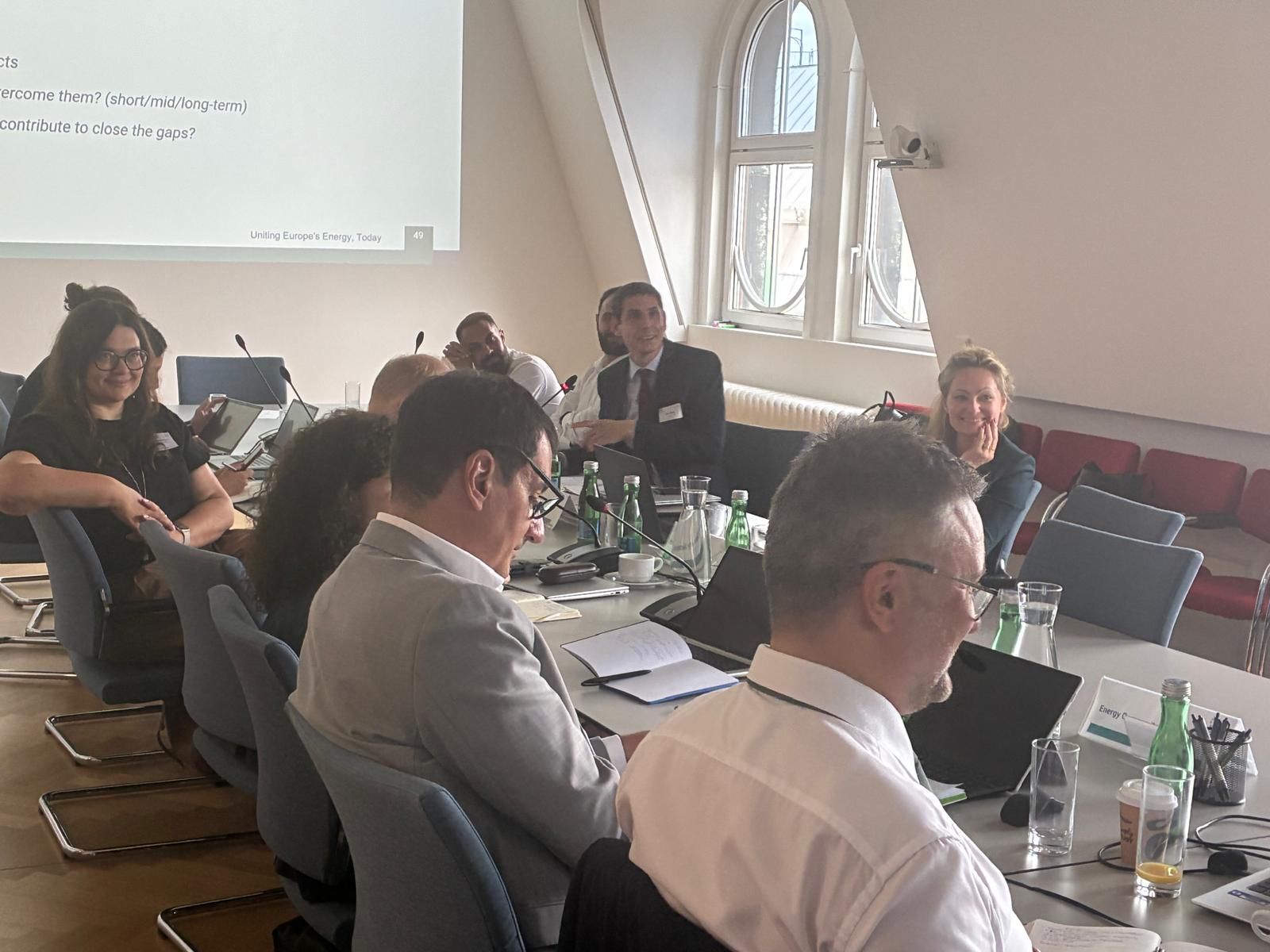
The 1st Roundtable on Sustainable NECP Financing brought together industry stakeholders from Energy Community Contracting Parties, commercial banks and IFIs to coordinate on investment gaps and opportunities in industry decarbonisation and energy efficiency.
%20(1).png)
The Energy Community Secretariat and KfW gathered power sector players, energy-intensive industries, private banks, and international financial institutions (IFIs) in Vienna on July 7 for the first Energy Community Roundtable on Sustainable NECP Financing. The goal: finding ways to increase and sustain financing for the Energy Community's energy transition, with a sharp focus on industry decarbonisation and energy efficiency — two of the most complex and capital-intensive pieces of the puzzle.
Across the Energy Community region, the conditions for such investment are emerging. On one hand, the region is advancing toward electricity market integration with the EU, even ahead of accession. This will create the stable regulatory frameworks and market size needed to open larger investment opportunities in renewables, grids, storage, and flexibility solutions. At the same time, National Energy and Climate Plans (NECPs) can serve as implementation and investment frameworks, giving governments, regulators, banks, and investors a clear view of priorities, timelines, and financing needs for the transition. Yet these same plans point to extremely large investment needs.
"The investment needed for a successful transition in the Energy Community region will not happen in isolation," affirmed Energy Community Secretariat Director Artur Lorkowski. "It requires a common understanding between those developing projects, those financing them, and those supporting the broader reform and investment environment."
Based on recent feedback from industry and banking stakeholders, participants explored ways to strengthen financing options, ranging from traditional debt financing and dedicated sustainable finance instruments to more innovative de-risking mechanisms. They also discussed best practices from EU countries on decarbonisation roadmaps and financing partnerships, while identifying shared cross-sectoral priorities for commercial banks and international financial institutions (IFIs). The event concluded by outlining a path forward for regular coordination and closer cooperation in aligning reform priorities, investment needs and financial support for the Energy Community’s clean transition.
%20(1).png)
.jpeg)
.jpeg)
.jpeg)
.jpeg)
.jpeg)
.jpeg)
.jpeg)
%20(1).png)
.jpeg)
.jpeg)
.jpeg)
.jpeg)
.jpeg)
.jpeg)
.jpeg)
%20(1).png)
.jpeg)
.jpeg)
.jpeg)
.jpeg)
.jpeg)
.jpeg)
.jpeg)