
Southeast and Eastern Europe convene in Vienna to advance gas market integration as Russian gas ban nears
Regulators, TSOs and market operators from across the Energy Community region and the European Union aligned on liberalisation, supply diversification and gas market integration priorities at SEEGAS meeting
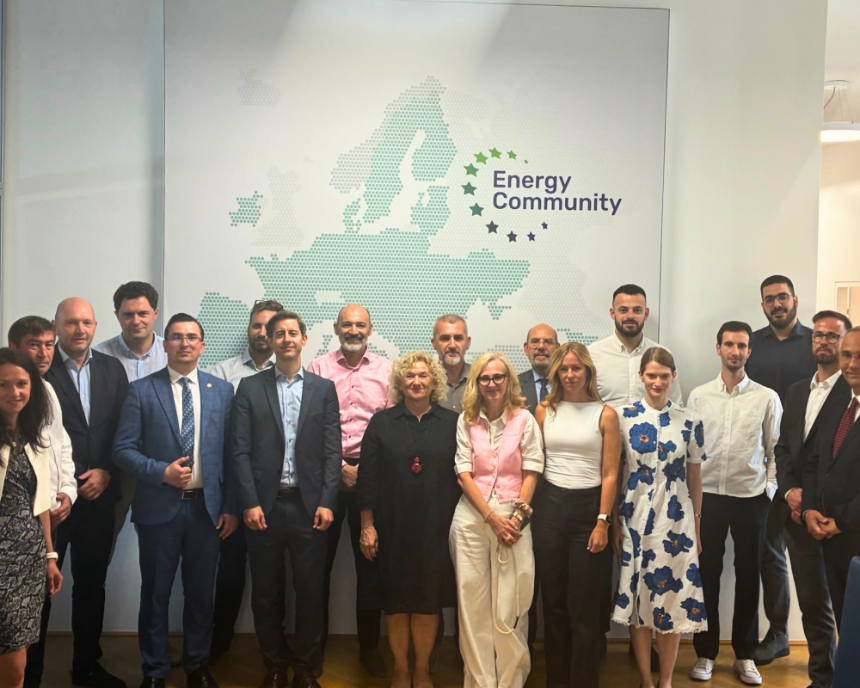
Ahead of the EU's upcoming gas phaseout deadlines, The South-East European Gas Initiative (SEEGAS) convened in Vienna today. The meeting brought together EU officials and regulators, transmission system operators from across EU Member States and Energy Community Contracting Parties.
At a time defined by heightened geopolitical uncertainty across global energy markets, and with discussions underway on incorporating the EU's Russian gas phaseout measures into the Energy Community legal framework, gas market integration efforts have taken on heightened importance.
In this regard, on 5 August, under the EU's fourth gas package, Member States will be required to apply network codes at all borders — including with the Energy Community region. Work is already underway between Contracting Parties, Member States and the European Commission to ensure mutual application, thereby aligning cross-border gas flow rules. The move is expected to increase market competitiveness and reduce exposure to supply disruptions.
Meanwhile, gas sector reforms across the region are laying the foundations for practical market integration. Moldova has opened its gas market to large non-household consumers, covering more than half of national demand. Serbia's regulator has granted a transmission license to Transportgas Srbija, upon a successful certification, which should now start opening the network to fair third-party access. North Macedonia's TSO is now adopting EU network codes.
As these reforms transform market integration into an operational reality across the Energy Community region, SEEGAS is gaining importance as a platform for regional coordination. While the region prepares for a future with reduced reliance on Russian gas, participants identified new opportunities to leverage Ukraine's underground gas storage facilities as a strategic tool for enhancing regional security of supply and market flexibility.
Meanwhile, SEEGAS will have an important role to play in ensuring regulatory alignment along the Trans Balkan Pipeline, which may soon evolve into a key route for LNG and other diversified gas flows—for example, from Black Sea production. The Central and South-Eastern Europe Energy Connectivity initiative has been working to remove barriers to efficient pipeline use, including through gas quality harmonisation and more predictable, competitive tariffs, with progress expected to be announced soon.
Finally, the commercial infrastructure needed to underpin gas market integration is also taking shape, with SEEGAS playing a potentially catalytic role. Five regional exchanges — spanning Ukraine, Romania, Greece, Hungary and Austria — detailed efforts to build the exchange infrastructure: the trading venues, clearing systems and hedging products that give buyers genuine alternatives when supply tightens.