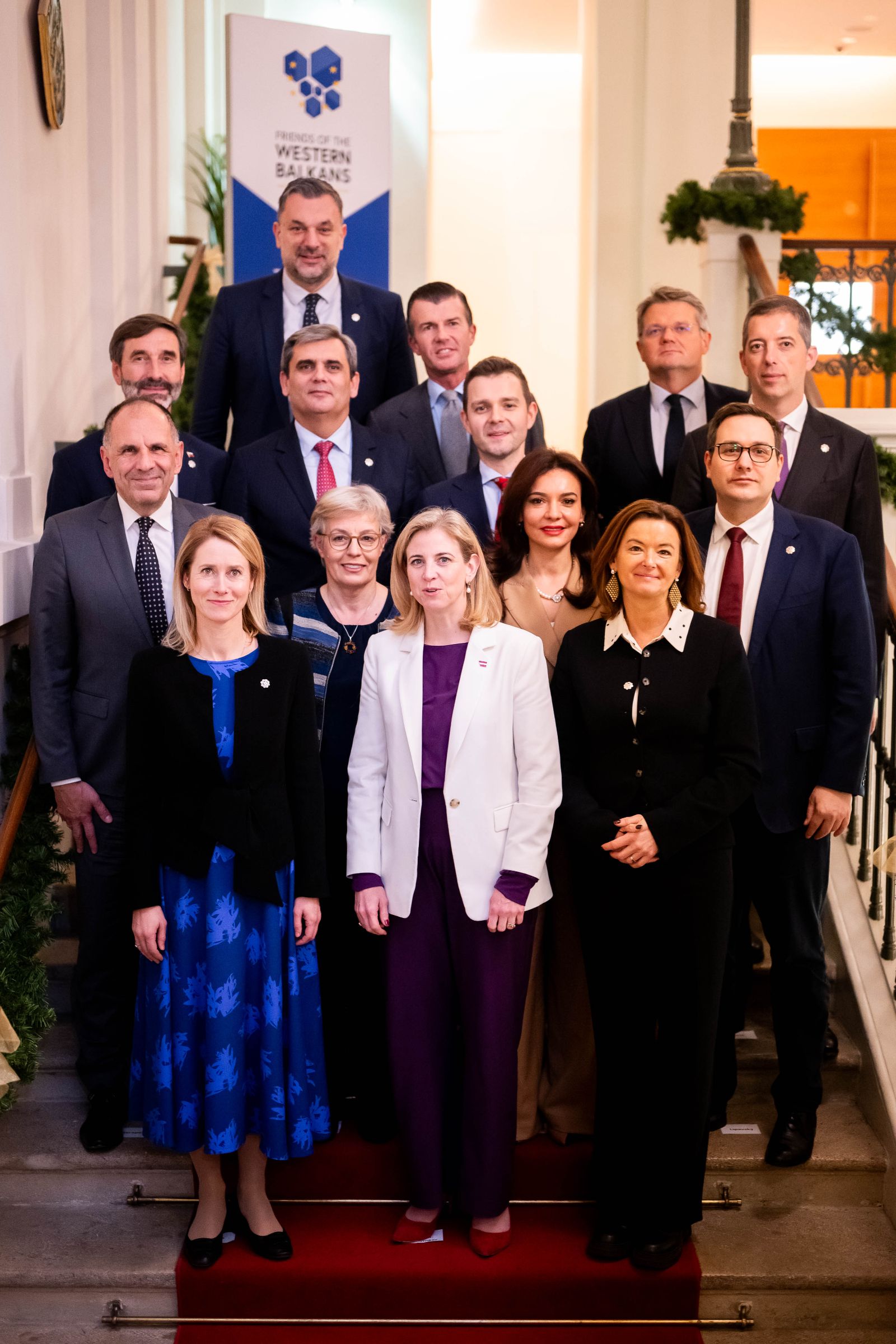

Cooperation on Western Balkans-EU energy integration advances in Vienna
At the Friends of the Western Balkans Foreign Ministers meeting, joint action on market integration, CBAM and carbon markets is identified as key to a decarbonised future for the region.
The Friends of the Western Balkans met in Vienna to advance cooperation on energy and EU integration, bringing together Foreign Ministers of the Western Balkans, EU Member States, and senior EU representatives, including High Representative and Commission Vice-President Kaja Kallas. During the meeting, Energy Community Director Artur Lorkowski presented priority actions to position the region as a strong partner in the EU’s energy and climate architecture.
Several major developments are now converging to shape the future of Western Balkan energy systems, making EU-Western Balkan cooperation critical to safeguard progress and accelerate the clean transition. Lorkowski underlined that accelerating the integration of Western Balkan electricity markets with the EU before accession will attract the investment needed to modernise and decarbonise the sector — investment that individual small markets cannot secure alone. This accelerated integration is possible under the Energy Community Framework.
Yet while WB6 are nearing electricity market integration, the EU’s Carbon Border Adjustment Mechanism enters into force on 1 January 2026. This will likely apply significant costs to imported electricity, including clean power, something that may both slow regional integration and delay renewable deployment unless non-intended CBAM impacts are mitigated.
"It is imperative that CBAM uplifts market integration and encourages renewable growth," Lorkowski stressed. "Integrating the Western Balkans into the EU’s energy market is just as important as tackling carbon leakage — and could ultimately deliver even greater climate benefits."
Finally, carbon markets are poised to become a practical tool of EU enlargement and just transition financing. Allowing the Western Balkans to participate in the EU’s 2040 climate architecture through international credits would give the region a pathway into the EU climate framework before accession and unlock new funding for long-term decarbonization. With these challenges and opportunities converging, coordinated action is essential. Joint progress on electricity market integration, CBAM and carbon markets would give the Western Balkans the tools, investment pathways and policy certainty needed to accelerate the clean transition and contribute meaningfully to Europe’s climate goals, Lorkowski concluded.